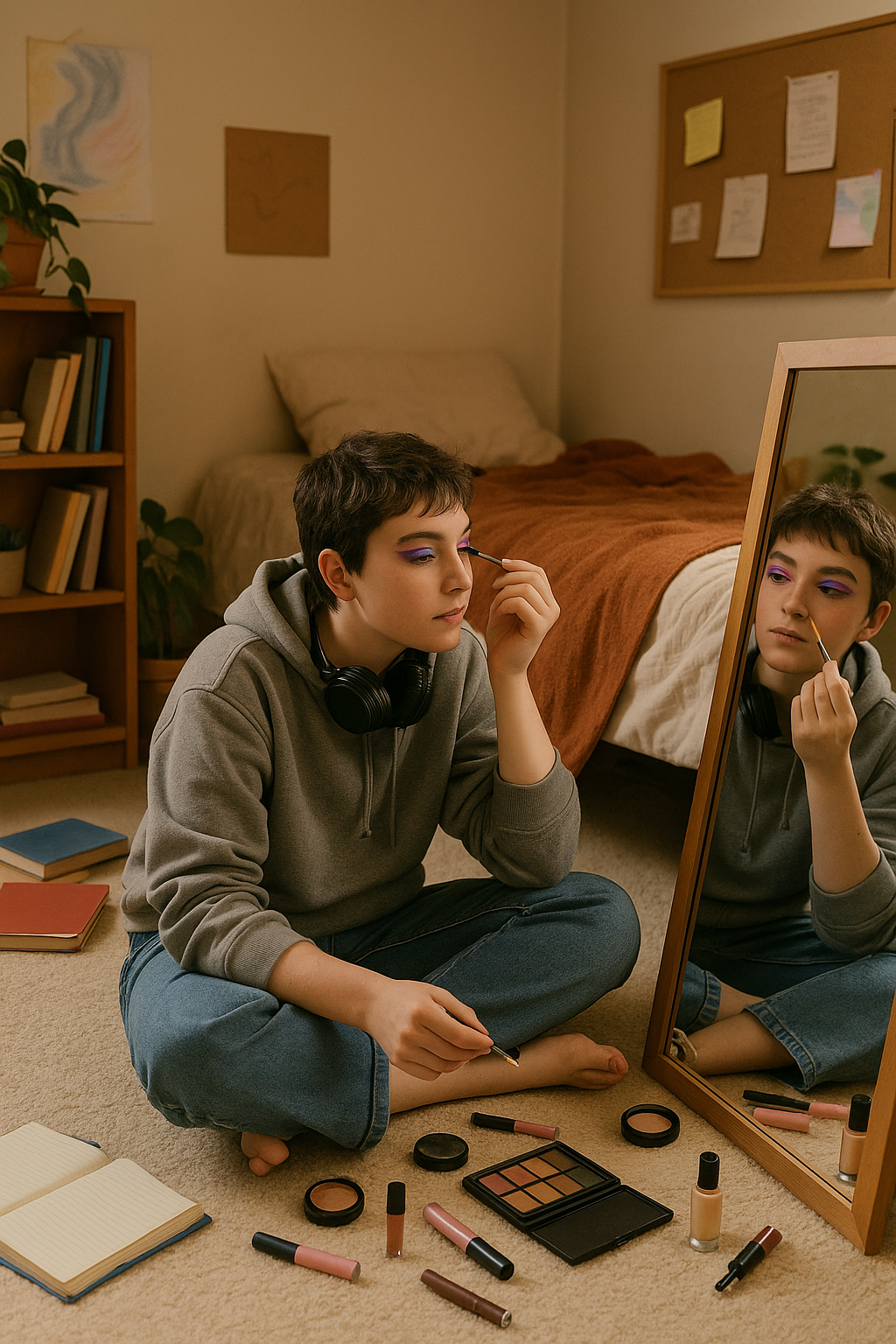
Let’s talk makeup. For some teenage girls with ADHD, it’s a daily dopamine boost in a compact. For others, it’s a sensory nightmare that smells like chemicals and feels like slime. And then there are the girls who love it, hate it, need it to mask, or reject it altogether as a form of protest. Sometimes, all of the above—on the same day.
If you’re a parent wondering why your daughter just spent two hours perfecting a winged eyeliner only to melt down right before leaving the house… you’re not alone. Makeup for ADHD teenage girls isn’t just about looking pretty. It’s about identity, regulation, rebellion, and sometimes, survival.
Let’s unpack what’s really going on under the foundation.
The Love-Hate Relationship: Why ADHD Teens Obsess Over (or Avoid) Makeup
Some ADHD teenage girls will tell you makeup is life. Others? “I’m not putting that sticky stuff on my face, it’s gross.”
The extremes make sense once you understand ADHD brains. Makeup can tick all the right boxes for ADHD:
Stimulation (endless palettes, sparkles, tutorials)
Creativity (blending colors = art!)
Belonging (hello, TikTok trends)
Dopamine (from buying new lip gloss to nailing a look)
But it can also trigger executive dysfunction and sensory dysregulation:
Time blindness = late again
Decision paralysis = 17 lipsticks, no idea which one to use
Sensory overwhelm = “This mascara feels like spiders on my lashes!”
So, why do ADHD teens love makeup one minute and hate it the next? Because their relationship with it isn’t cosmetic – it’s neurological.
The Sensory Side of Makeup (a.k.a. Why That Lip Gloss Is So Annoying)
Makeup isn’t just seen – it’s felt. For sensory-sensitive ADHD teens, the feel of sticky lip gloss, cakey foundation, or heavily scented products can be unbearable.
On the flip side, some girls find makeup soothing. The repetitive motions of applying foundation or brushing on highlighter can be regulating – like stimming in disguise.
What helps?
Lightweight products (think mousse-like textures or tinted moisturizers)
Fragrance-free formulas for sensitive noses
Cooling primers or serums (the kind that say “hydrating” on the label)
Tools that reduce messy fingers: soft sponges or gentle brushes
✅ Sensory-Friendly Find: Try a Makeup Sponge Kit (#ad)—easy to clean, gentle on skin, and oddly satisfying to use.
For girls who get overstimulated by textures, the right makeup tool can be the difference between meltdown and masterpiece.
Masking with Mascara: The Hidden Cost of Looking “Put Together”
Let’s get real: for many ADHD girls, makeup becomes a mask – literally and emotionally. It’s a way to look in control when everything inside feels scrambled.
“I don’t want people to know I cried this morning because I couldn’t pick an outfit,” one teen told me. “Makeup makes me look like I’ve got it together.”
This is where ADHD masking and cosmetics intersect.
Foundation covers dark circles from poor sleep.
Concealer hides the fallout of emotional dysregulation.
Lipstick becomes a shield when speaking up in class feels terrifying.
Is this bad? Not always. But it’s worth talking about. Because when makeup becomes compulsory – when it’s no longer a choice but a survival tactic – it starts to wear them down, not lift them up.
Makeup as a Confidence Boost (When It’s a Choice)
On the flip side, makeup can be a major confidence boost. For some ADHD teenage girls, it’s not about masking – it’s about expressing who they are in a way words can’t.
Purple eyeliner? Because she can.
Graphic liner? She’s into design and anime.
Red lipstick to school? She’s anxious but bold.
Makeup can give ADHD girls a sense of control, creativity, and accomplishment—especially in a world that often tells them they’re messy, impulsive, or too much.
✅ What Works for Us: A mini Eyeshadow Palette (#ad) is perfect for teens who love experimenting without getting overwhelmed by options.
Let them explore. Let them choose. And remind them that confidence doesn’t come from perfect eyeliner—it comes from seeing themselves and being seen.
Hacks for ADHD Makeup Routines (Because Time Blindness Is Real)
Now let’s get practical. A lot of ADHD teens either spend way too long doing their makeup (hyperfocus alert) or give up halfway because they’re running late or forgot where they put their mascara.
Here are a few makeup hacks for ADHD focus:
Use a timer. Set 20 minutes. Stop when the alarm rings. No more perfection paralysis.
Prep a mini “daily essentials” bag with just 3–5 products she actually uses.
Try multitasking products: tinted moisturizer with SPF, lip + cheek balm, brow + liner pencil.
Keep mirrors near natural light so they don’t chase good lighting around the house.
✅ ADHD-Friendly Tool: Try a Tabletop Makeup Organizer (#ad) with compartments. Easier to spot things = less stress and forgotten steps.
Peer Pressure, Beauty Culture, and the Curse of Rejection Sensitivity
Makeup doesn’t exist in a vacuum. Teenage girls are watching their friends, influencers, and the occasional “no makeup” selfie that somehow still looks flawless.
For ADHD teens prone to rejection sensitivity, even a throwaway comment about appearance can hit hard.
“She said I looked tired without makeup. I didn’t sleep for two days thinking about that.”
Parents: tread gently here. Don’t critique their look. Don’t say “you don’t need that much makeup.” Instead, ask:
“Do you enjoy putting it on or is it stressing you out?”
“Does this feel like self-expression or pressure?”
Help them reflect, not defend.
When Makeup Isn’t the Answer
Some ADHD girls just don’t vibe with makeup – and that’s okay.
They may:
Hate the feel of anything on their face
See it as a “waste of time” when they’re already overwhelmed
Prefer expressing themselves through clothes, hair, or art
They’re not being rebellious. They’re being authentic.
Support them in finding other confidence boosters. Offer fragrance-free skincare, soft scarves, funky earrings-anything that feels good and lets them show up in their own way.
For Parents: How to Talk About Makeup Without Making It Awkward
This isn’t just about mascara. It’s about identity, autonomy, and self-worth.
Here are a few tips:
Ask questions instead of making assumptions.
Reflect on your own experiences with makeup growing up.
Celebrate their creativity and their boundaries.
If they’re struggling with self-image, talk about it. Makeup won’t fix that—but understanding and support might.
Final Thoughts
Makeup for ADHD teenage girls is never just about makeup. It’s about how they regulate, how they mask, how they play, and how they present themselves to the world—especially when that world doesn’t always understand them.
Whether your daughter has 14 lip glosses in her backpack or refuses to wear anything more than sunscreen, she’s telling you something.
The question is: are we listening?