


As someone who’s lived with ADHD, I’ve heard the same question time and time again: Do kids outgrow ADHD? It’s a question that’s been asked by concerned parents, well-meaning friends, and even curious strangers. I mean, wouldn’t it be great if ADHD was like a pair of shoes that kids could just outgrow as they get older? The fact is, it’s not quite that simple. ADHD doesn’t just vanish like baby teeth. To explain this, we need to dig deeper into the science, myths, and different perspectives surrounding this question.
Misconception 1: Do Children Outgrow ADHD, or Is It Just a Childhood Problem?
First, we must start by addressing the elephant in the room—one of the biggest misconceptions about ADHD is that it’s a childhood disorder that magically disappears once you hit adulthood. This belief is shockingly common. I’ve personally been told, “Oh, your daughter will grow out of it,” as if her ADHD was just a phase like that awkward middle school haircut we’d rather forget.
The reality, however, is far more nuanced. ADHD is a neurodevelopmental disorder. That means it affects how the brain develops and functions, particularly in areas related to attention, impulse control, and hyperactivity. Research shows that about 60-70% of children with ADHD continue to experience symptoms into adulthood. So, while some individuals may see a reduction in symptoms or a well-developed symptoms management, most don’t simply “outgrow” it.
ADHD Through the Lifespan: Why Most Children Don’t Outgrow It
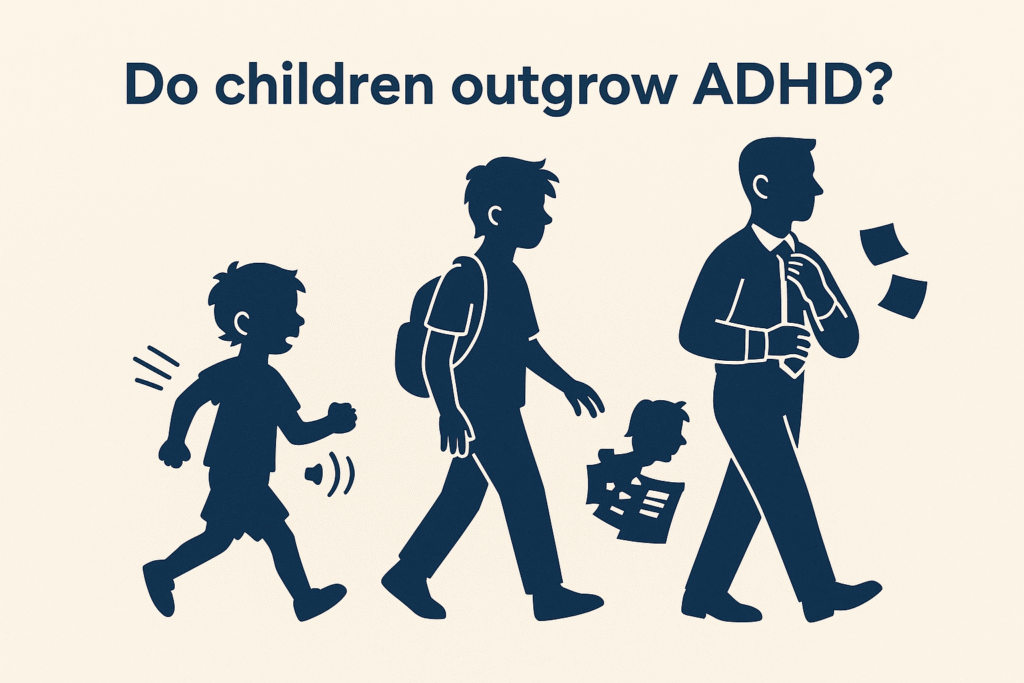
What is science saying on this? There are plenty of studies that I am not going to quote here, suggesting that ADHD isn’t something that just pops up in childhood and decides to pack up and leave as soon as you hit puberty. It’s actually a lifelong condition that can evolve over time. Symptoms may change, but they don’t usually disappear entirely. In childhood, ADHD often manifests as hyperactivity (think: bouncing off the walls, excessive talking, and fidgeting). But as children grow into teens and adults, hyperactivity may decrease, while inattentiveness, impulsivity, and disorganization may become more prominent and manifest in new ways.
Studies using brain imaging techniques have shown that certain areas of the brain responsible for attention and impulse control develop differently in individuals with ADHD. These differences don’t just vanish once you turn 18. In fact, some researchers suggest that the ADHD brain matures at a slower rate, but it never fully catches up.
🧩 Myth vs Fact: Do Children Outgrow ADHD?
Myth: Most kids outgrow ADHD once they become teenagers or adults.
Fact: Research shows around 60–70% of children with ADHD continue to experience symptoms into adulthood. Symptoms may change, but the condition rarely disappears entirely.
Misconception 2: Adults with ADHD Just Haven’t “Matured”
Another misconception I hear is that adults with ADHD simply haven’t “grown up” or learned to manage their responsibilities. This one hits home because, as a woman with ADHD, I’ve often been judged for being “scatterbrained” or not having my life together. But ADHD isn’t about maturity—it’s about how your brain is wired.
In fact, many adults with ADHD develop coping mechanisms to navigate daily challenges. We become masters of sticky notes, alarms, and to-do lists (that we occasionally forget to check, but hey, we try!). For those who were diagnosed later in life, there’s often a huge sense of relief in finally understanding why certain tasks, like time management and organization, always felt like an uphill battle.
Misconception 3: “They Seem Fine, So They Must Have Outgrown It”
There’s also a misconception that if someone isn’t displaying obvious symptoms, they must have outgrown ADHD. This is where things get a bit tricky. ADHD symptoms can fluctuate. Some adults may appear to have fewer symptoms, but that doesn’t mean they’ve outgrown the disorder. They might simply have found strategies that help manage their ADHD, or the symptoms may manifest differently. They may be well under control after years of learning symptoms management or if not managed, they may cause new problems in adulthood.
For example, an adult who had hyperactive tendencies as a child might not be bouncing off the walls anymore, but they may still struggle with restlessness, trouble focusing, and impulsivity. That can cause the person losing jobs frequently or have continuous relationship challenges. And let’s not forget about masking—many individuals with ADHD, especially women, become experts at hiding their symptoms, making it harder for others to recognize their struggles.
The Role of Hormones: Why Girls and Women Rarely Outgrow ADHD
Now, let’s discuss hormones, because, oh dear, do they love to mess with us. For many women, hormonal changes throughout life can affect ADHD symptoms. Puberty, pregnancy, and menopause can all trigger fluctuations in symptoms, sometimes making them more intense.
Puberty, for instance, can heighten ADHD symptoms in teens. Similarly, pregnancy can bring a whole new set of challenges—like forgetting where you left your phone while you’re holding it. Hormonal shifts during menopause can also lead to a resurgence of symptoms for women who thought they had their ADHD under control. So, if you’re a woman with ADHD, the idea of “growing out of it” might feel like an even bigger myth.
Can ADHD Be Managed, If Not Outgrown?
Alright, so we’ve established that most people don’t outgrow ADHD. But that doesn’t mean you’re doomed to a life of chaos. While the condition may stick around, there are plenty of ways to manage it effectively.
- Medication: For many individuals, medication (like stimulants) can help manage ADHD symptoms. This is true for both children and adults.
- Behavioural Therapy: Learning coping strategies, time management skills, emotional regulation and mindfulness techniques can help reduce the impact of ADHD on daily life. Therapy isn’t just for kids—it’s incredibly useful for adults navigating the disorder as well.
- Lifestyle Adjustments: Simple changes, like regular exercise, better sleep hygiene, and a balanced diet, can have a surprisingly positive effect on ADHD symptoms. Think of it as fine-tuning your brain’s engine.
ADHD doesn’t just go away, but it can certainly be managed, and many adults with ADHD live happy, successful lives.
The Emotional Impact of “Outgrowing” Expectations
Now, I’d be remiss if I didn’t mention the emotional toll that comes with the idea of “outgrowing” ADHD. Growing up, many of people were told, “You’ll get over it when you’re older,” only to reach adulthood and realize that wasn’t the case. This can lead to feelings of frustration, failure, self-doubt, and sometimes shame.
It’s important to recognize that ADHD isn’t a character flaw, it’s a neurological condition. If you’re a parent of a child with ADHD, they are not immature or lazy; their brain just works differently. Accept it, work with it, support them and help them to find strategies that allow them to thrive, rather than waiting for a day when they will magically outgrow it.
Conclusion: Growing With ADHD, Not Out of It
So, do children outgrow ADHD? In short—no, not usually. While some may experience a reduction in symptoms as they age, ADHD is a lifelong condition for most. But the good news is that with the right tools and support, individuals with ADHD can grow into happy, productive adults. It’s not about outgrowing the disorder; it’s about learning to grow with it.
As we continue to bust the myths surrounding ADHD, let’s remind ourselves (and others) that ADHD doesn’t define us—it’s just one part of who we are. After all, we may not have outgrown ADHD, but we sure have learned to roll with it. And maybe that’s the real victory.