If you have ADHD, you’ve probably heard it all before: “Just stick to a routine.” “Why don’t you prioritise better?” Or my personal favourite, “Why don’t you just try harder?” The truth is, for those of us with ADHD, trying to force our brains into a neurotypical box is exhausting and counterproductive. That’s why working with ADHD energy, rather than against it, is such a game-changer. It means tapping into your natural rhythms to get things done without burnout.
Understanding Energy Fluctuations in ADHD
The Science Behind ADHD Energy Patterns
Let’s talk dopamine. For people with ADHD, our brains often have a love-hate relationship with this neurotransmitter. When dopamine levels are high, we can be unstoppable – hyper focused, creative, and crushing that to-do list. But when they dip, we’re suddenly staring at the ceiling wondering why brushing our teeth feels like climbing Everest. Understanding this seesaw can help us stop fighting our natural rhythms and start embracing them.
Daily Energy Variability
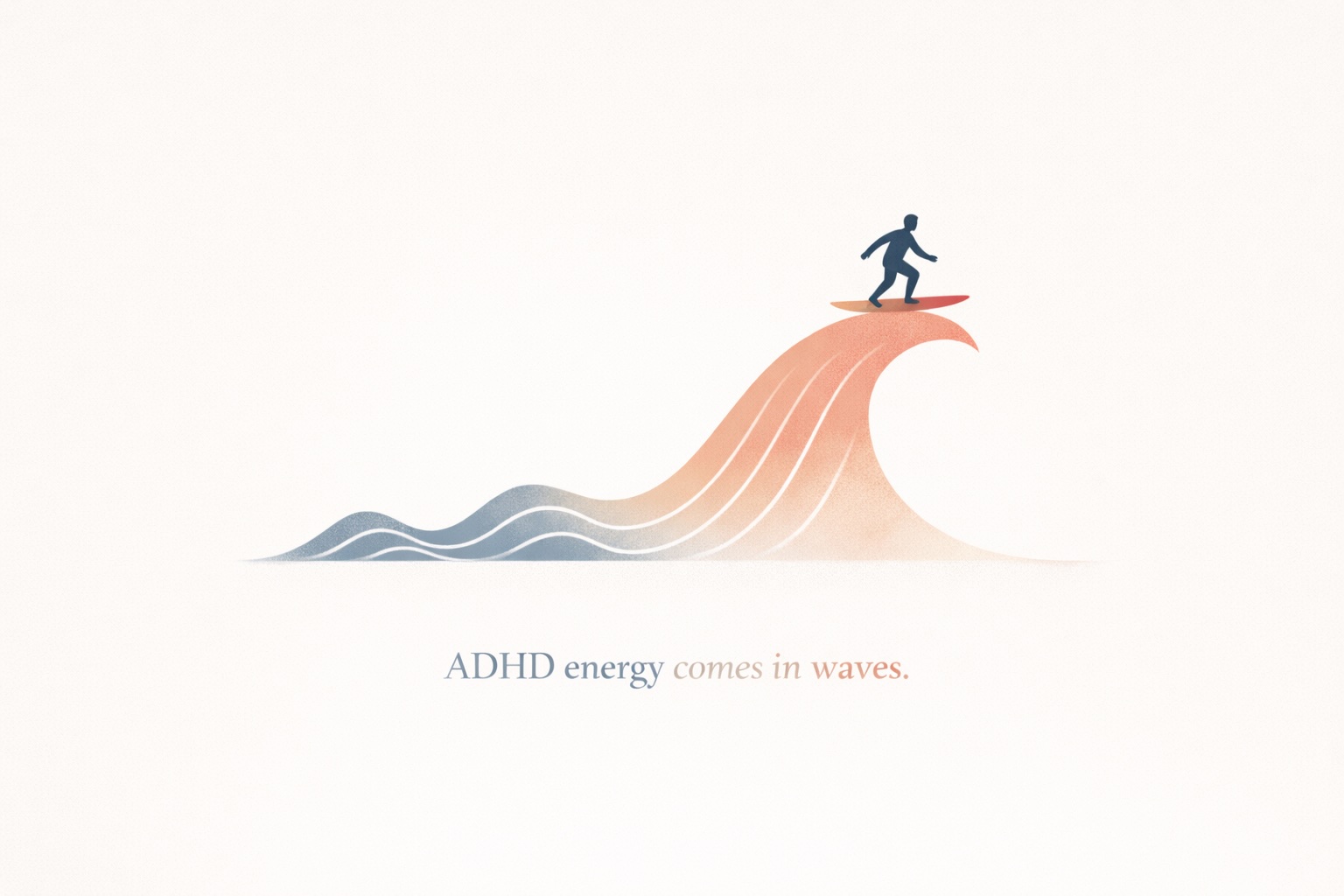
Raise your hand if your energy levels feel like they were designed by an over-caffeinated toddler with a crayon. One moment, you’re all-in on reorganising the wardrobe; the next, you’re contemplating a nap on the kitchen floor. Traditional 9-to-5 schedules often clash with this ADHD ebb and flow, leaving many of us feeling like we’re constantly swimming upstream. The solution? Stop swimming against the current – float with it, as much as you can. It took me ages to stop fighting this and learn how to use it.
Why This Strategy Works for ADHD
Reduces Frustration and Burnout
Imagine trying to sprint uphill during a thunderstorm. That’s what it feels like to force productivity during low-energy periods. When you work with your energy instead, you’re not just kinder to yourself – you’re also far more effective.
Enhances Productivity and Creativity
Your high-energy moments are your secret weapon. By channelling them into tasks that require focus or creativity, you can maximise your output and even surprise yourself with what you’re capable of.
Improves Mental Health
Let’s face it. Fighting your brain every day is exhausting. When you align with your natural rhythms, you’re setting yourself up for wins, which boosts confidence and reduces stress. Plus, you get to feel a little rebellious breaking away from rigid societal norms.
Strategies for Aligning Tasks With Energy Levels
Track Your Energy Patterns
Grab a journal, app, or even sticky notes – whatever works for you. Spend a week noting your energy levels throughout the day. (Pro tip: Don’t overthink it. If your note says, “2 PM: Needed caffeine and a nap,” you’re doing it right.) Patterns will emerge, and you’ll see when you’re naturally at your best.
Match Tasks to Energy Levels
Here’s the fun part. Matching tasks to your energy. High-energy moments? Tackle those big, hairy projects that need creativity or deep focus. Moderate energy? Perfect for meetings or collaborative work. Low energy? Do admin tasks, like sorting emails or organising files. (Or, let’s be honest, scrolling Instagram with minimal guilt.)
Plan for Flexibility
Life rarely follows a perfect plan. Kids get sick, meetings move, and sometimes your brain simply says “not today.” Try to build some wiggle room into your schedule so you can adjust without feeling like you’ve failed. Flexibility isn’t a lack of discipline – it’s often what makes a plan work in the real world.
Take Effective Breaks
When your energy dips, don’t push through – recharge instead. A quick walk, some stretching, or even a dance break to your favourite song (more dopamine please) can make a world of difference.
Tools and Techniques to Support This Approach
Energy Tracking Tools
Apps like Daily Pulse or a simple spreadsheet can help you identify trends. Personally, I use sticky notes plastered all over my desk because apparently, I think I’m starring in a crime show.
Timers and Structured Breaks
The Pomodoro technique – working for 25 minutes and then taking a 5-minute break, is a really affective approach for me (not for everyone). Bonus: Those short breaks are great for snack runs or staring into space (both highly underrated activities).
Body Doubling
Sometimes, just having someone nearby can keep you on track. Whether it’s a coworker, friend, or virtual buddy, body doubling can make mundane tasks less daunting.
Challenges and How to Overcome Them
Balancing External Demands With Internal Energy
Deadlines and responsibilities don’t always align with our energy levels. Learn to advocate for flexible deadlines or work environments when possible. If that’s not an option, try breaking big tasks into smaller, more manageable chunks. We all know that most workplaces aren’t naturally accommodating, but it’s worth trying. People can’t support you if they don’t know what you need, so take the initiative to communicate and negotiate what works best for you.
Read more: Workplace Accommodations for ADHD: 10 That Actually Help
Avoiding Procrastination
Ah, procrastination – the ADHD nemesis. Recognise when you’re genuinely low on energy versus when you’re avoiding a task. Sometimes starting with just two minutes can build momentum.
Read more: What’s Behind ADHD Task Paralysis, and How Do You Get Unstuck?
Overcoming Societal Expectations
Let go of the pressure to conform to traditional productivity norms. Success looks different for everyone, and that’s okay. Societal norms often create a rigid definition of success, making people feel like they’re failing if they don’t fit into a pre-determined framework. This can be particularly challenging for people with ADHD, who may already feel out of step with these expectations. Embracing your unique path can be liberating, empowering you to redefine what success means for you.
Real-Life Examples and Personal Stories
Once, during a high-energy afternoon, I decided to organise my entire digital photo library – 20 years’ worth of chaos. Three hours later, I emerged victorious, albeit with a slightly stiff neck. The key? I struck while the energy iron was hot.
Contrast that with the time I tried to tackle my taxes during a low-energy slump – a decision I’ll never repeat.
Of course, not every task in life has perfect timing. But for many everyday decisions – tidying a drawer, answering emails, organising files – it’s perfectly reasonable to follow your energy rather than fight it. Allowing yourself that flexibility often leads to getting more done, with a lot less frustration.
Applications Across Life Areas
Work
Flexible schedules or remote work can make a huge difference. If your job allows, propose a workflow that aligns with your energy peaks.
Education
Students can benefit from studying during their high-energy times and using tools like timers or study groups to stay focused.
Home Life
Chores are less dreadful when done during energy bursts. For example, laundry folding at 11 PM might sound weird, but it works for me!
Encouraging a Paradigm Shift
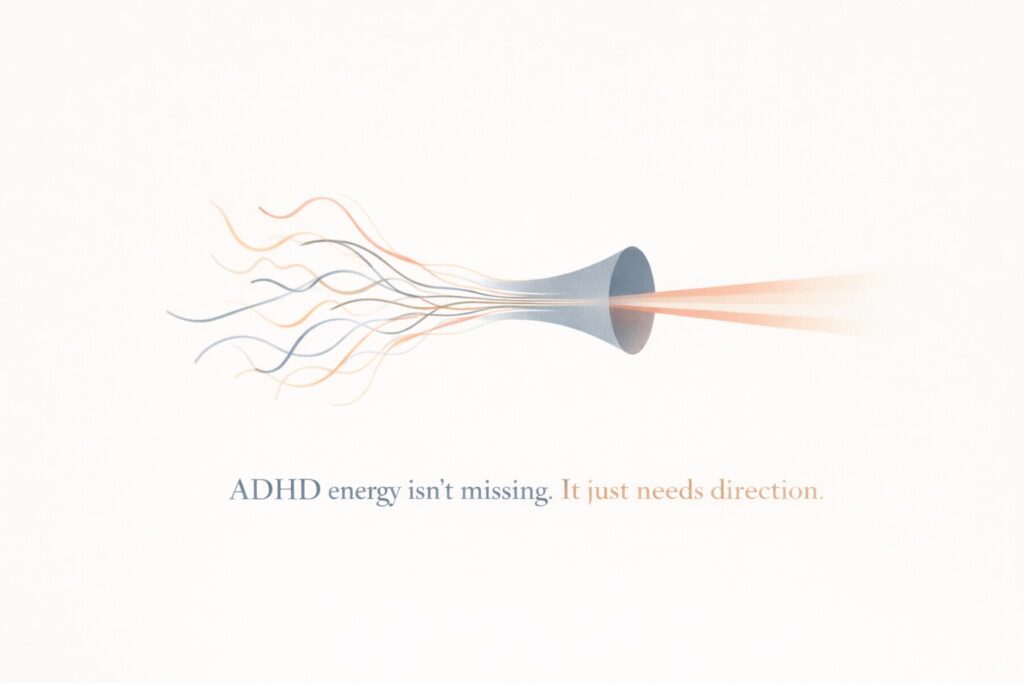
Let’s challenge the outdated 9-to-5 productivity model and embrace the idea that working with our brains, not against them, leads to better results. ADHD brains are wired for creativity, adaptability, and out-of-the-box thinking—let’s celebrate that.
Read more: Why ADHD Accommodations Fail (And What Actually Works Instead)
Conclusion
Stop fighting your energy and start flowing with it, as much as you can. Experiment with these strategies, and remember, progress is better than perfection. When you align with your natural rhythms, you’re not just surviving – you’re thriving. So go ahead, work with your energy, and let your ADHD superpowers shine!