
You’ve been looking forward to this all morning.
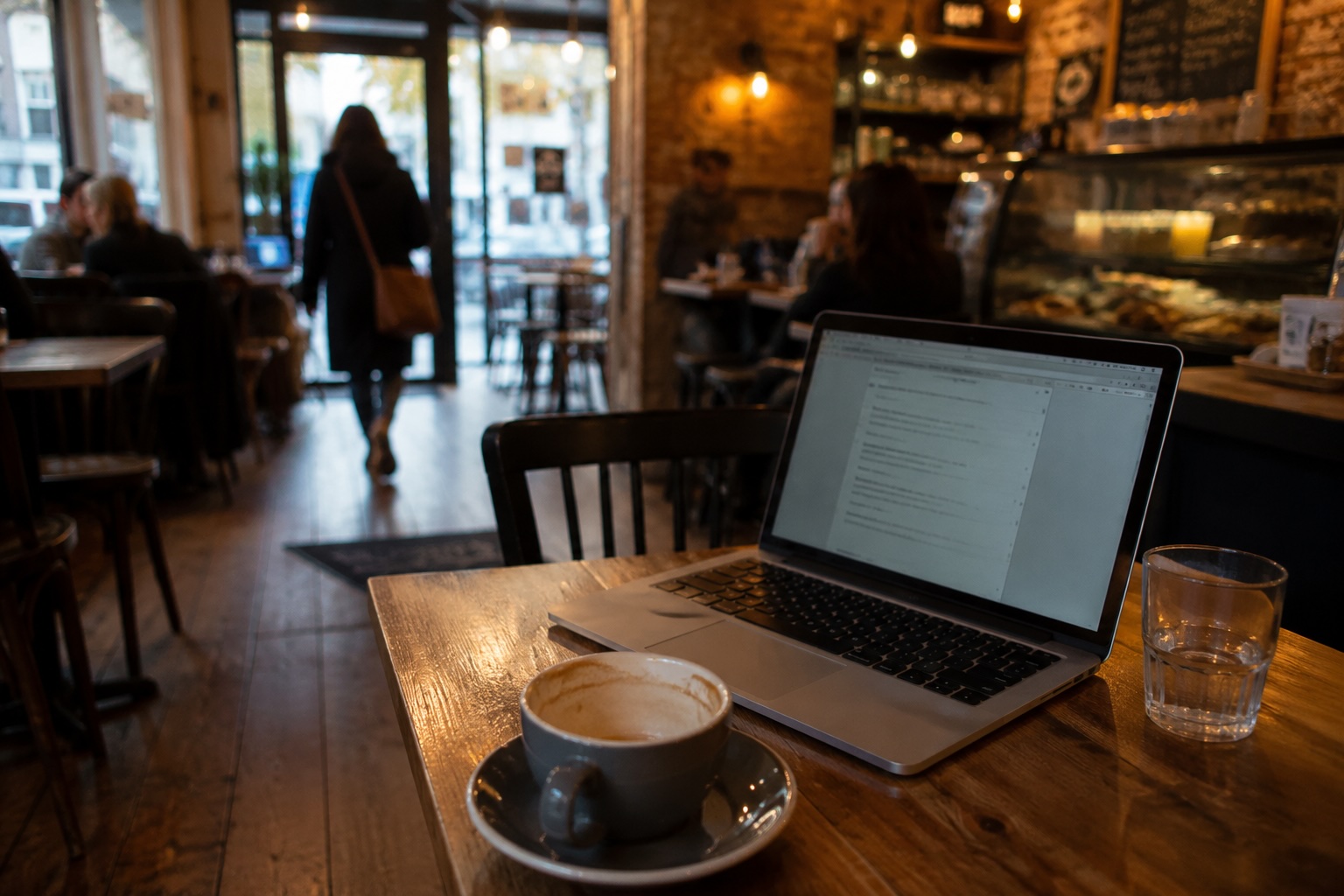
You grab your laptop, order a coffee and settle into your favourite café. The background chatter is comforting. There’s enough movement to keep your brain awake, enough noise to help you focus. You feel energised.
“This is exactly what I needed.”
Twenty minutes later, something changes.
The espresso machine suddenly sounds much louder. The person behind you laughs. Someone starts a video call at the next table. A chair scrapes across the floor. The music feels just a little too loud.
Without really thinking about it, you close your laptop, leave half your coffee behind and walk outside. The fresh air feels like relief.
As you walk away, you wonder:
“Five minutes ago I wanted to be here. What changed?”
If you have AuDHD, this experience may feel surprisingly familiar. And it isn’t just about coffee shops. It’s about something much bigger.
Why This Is So Common in AuDHD
One of the most confusing aspects of AuDHD is that it combines two nervous system tendencies that can seem to pull in opposite directions.
The ADHD side often craves stimulation. Novelty, movement, conversation, background noise, interesting environments and new experiences can all help the brain feel engaged.
The autistic side may be much more sensitive to sensory information. Noise, unpredictable conversations, bright lights, crowded spaces or too many competing demands can become overwhelming surprisingly quickly.
The result is a paradox. You genuinely need stimulation. You also genuinely become overwhelmed by it.
These aren’t contradictory experiences.
They’re happening in the same nervous system. (sensoryoverload.info)
It Isn’t Just Coffee Shops
Once you notice this pattern, you begin to see it everywhere.
At work
You enjoy working in the office because people help keep you motivated.
Then after an hour of conversations, phones ringing and constant interruptions, all you can think about is finding a quiet meeting room.
Socialising
You’ve been looking forward to seeing your friends all week.
An hour later you’re secretly calculating how early you can leave without appearing rude.
Holidays
Planning the trip is exciting.
Researching hotels is exciting.
Packing is exciting.
Actually being surrounded by airports, queues, unfamiliar places and constant activity?
Less exciting.
Home
You turn music on because silence feels uncomfortable.
Half an hour later you’re asking Alexa to stop immediately because every sound suddenly feels irritating.
Relationships
You desperately want company.
Then you desperately need space.
Then, after some quiet time, you miss the company again.
To other people this can look inconsistent.
To the person experiencing it, it can feel even more confusing.
“Why can’t I make my mind up?”
Perhaps because this isn’t about making your mind up.
The Hidden Problem Isn’t Stimulation
Most explanations stop here. They say people with AuDHD are both stimulation-seeking and sensory-sensitive.
That’s true.
But I don’t think it’s the most useful way of understanding what’s happening. I think the real difficulty is something else.
Your nervous system can change state faster than you expect it to.
That’s an important difference. When you decided to go to the café, you genuinely wanted stimulation. That decision wasn’t wrong. The problem wasn’t the café. The problem was assuming your nervous system would still want exactly the same thing thirty minutes later. Often, it doesn’t.
The Prediction Gap
This is the idea I wish more people talked about.
Many AuDHD adults are remarkably good at recognising what they need right now. They’re often much less able to predict what their nervous system will need a little later.
You decide to stay at the party because you’re enjoying yourself. You don’t realise you’re slowly approaching overload. You book back-to-back meetings because you’re feeling productive. You don’t anticipate how mentally exhausted you’ll be by lunchtime.
You arrange three social events over the weekend because you’re craving connection. By Sunday evening you’re wondering why everything suddenly feels too much.
This isn’t poor planning.
It’s a prediction gap.
You made the decision based on the brain you had in that moment.
Not the brain you would have later.
It’s Like Packing for Today’s Weather
Imagine packing clothes for a weekend away. But instead of checking the forecast, you only look outside your window right now. If it’s sunny, you only pack T-shirts. If it’s raining, you only pack waterproofs. Sometimes you’d get lucky. Other times you’d be completely unprepared.
Many AuDHD adults make decisions in a similar way. Not because they’re impulsive. Because the future state of their nervous system is genuinely difficult to predict.
Why Other People Find This So Confusing
This pattern often creates misunderstandings.
Your partner says:
“But you wanted to come.”
They’re right.
Your manager says:
“You asked to work with the team.”
Also true.
Your friend says:
“I thought you loved busy cafés.”
You do.
Sometimes.
These statements aren’t contradictory. They’re simply describing different moments in time. Unfortunately, other people usually assume that if you enjoyed something at 10 a.m., you’ll enjoy it equally at 2 p.m.
Your nervous system doesn’t always work that way.
Stop Thinking About Places
One of the biggest shifts I see in coaching is when people stop asking:
“Is this environment good for me?”
Instead they begin asking:
“How long is this environment good for me?”
That’s a very different question.
A busy café might be perfect…
for forty minutes.
An open-plan office might work…
until lunchtime.
A family gathering might be enjoyable…
for two hours.
The goal isn’t finding the perfect environment.
The goal is recognising your stimulation window. Some environments support you for longer than others. Learning your own patterns is often far more helpful than trying to find a place that’s perfect all the time.
Working With Your Nervous System Instead of Against It
Once you understand this pattern, your strategies start to change. You stop trying to “push through.” Instead, you begin working with the way your nervous system naturally responds.
One helpful approach is to build flexibility into your plans. Rather than deciding you’ll stay somewhere all afternoon, give yourself permission to check in with yourself after an hour.
You also become better at recognising early signs of overload. Many people notice subtle changes before they reach breaking point. Perhaps it’s becoming unusually irritable. Finding yourself scanning the room. Losing the thread of conversations. Wanting everyone to stop talking.
These aren’t character flaws. They’re information.
Transitions also matter more than many people realise. Five minutes outside. A short walk. A quiet room. Putting headphones on.
These small resets often prevent much bigger crashes later.
Perhaps the biggest shift is letting go of the idea that there is one perfect level of stimulation. There isn’t.
Think of your nervous system more like a thermostat than an on/off switch. It constantly needs small adjustments. That’s normal.
Could Coaching Help?
Most AuDHD adults don’t need someone to tell them that they become overwhelmed.
They already know.
What they’re often missing is the ability to recognise the patterns before overwhelm happens.
In coaching, we often work on identifying your unique stimulation patterns, understanding how your nervous system changes throughout the day, and designing work, relationships and routines that are flexible enough to change with it.
If you’ve recognised yourself throughout this article, you don’t have to figure it all out alone. You can learn more about my one-to-one coaching and how we can work together here.
Perhaps You Aren’t Inconsistent After All
Many people with AuDHD spend years believing they’re indecisive. Unreliable. Inconsistent.
I wonder whether those words are sometimes unfair.
Perhaps you aren’t constantly changing your mind. Perhaps your nervous system is simply giving you new information more often than you expected.
The goal isn’t to make yourself need the same thing all day. The goal is to become better at noticing when your needs have changed.
Because once you stop expecting your brain to stay in exactly the same state from morning until evening…
your behaviour suddenly starts making a lot more sense.
Final thought
One of the most valuable things I’ve learned from working with neurodivergent adults is that understanding often comes before change.
When people realise they’re not inconsistent, but responding to a nervous system whose needs shift more dynamically than they realised – they usually stop blaming themselves.
And that’s often the moment they can finally start working with their brain instead of spending years trying to fight it.