


More Than Just Forgetfulness: The ADHD Object Disappearing Act
If you have ADHD (or love someone who does), you’ve likely experienced the Great Disappearing Act – where objects seem to vanish into thin air. Your phone was just in your hand, but now it’s missing. Your wallet? Probably hiding in the fridge. And those important work notes? The universe absorbed them into an unknown dimension.
Losing things with ADHD isn’t just an inconvenience —it’s an emotional whirlwind of frustration, self-blame, and sometimes full-blown panic. But here’s the thing: it’s not just about forgetfulness. It’s about how the ADHD brain functions.
Why Losing Things Happens So Often with ADHD
1. Working Memory Deficits: The Brain’s “RAM” is Always Full
Imagine your brain as a laptop with too many tabs open, constantly switching between tasks. The mental sticky note reminding you where you put your keys gets lost in the shuffle as new tasks demand attention. By the time you try to recall where you last saw them, that memory has already been replaced, leaving you with no clue where to start looking.
2. Out of Sight, Out of Existence
People with ADHD often struggle with object permanence—if we don’t see something, we practically forget it exists. That’s why our phones end up in the laundry basket and why we own six pairs of sunglasses but can’t find a single one when we need them.
3. Sensory Overload & Distractibility
If a room has too much visual clutter, our brains treat it as white noise. So, even if the keys are sitting right there, we literally don’t register them because our brains didn’t mark them as “important.” It’s like playing an unintentional game of hide-and-seek with ourselves.
How It Feels: The Emotional Impact of Losing Things
Losing things isn’t just a small inconvenience—it’s an exhausting cycle that goes something like this:
🔹 Step 1: Instant Panic
You need to leave the house in two minutes, but your car keys have vanished. You retrace your steps, check your pockets, check your bag… and then check your pockets again, because surely, they must have magically reappeared.
🔹 Step 2: Frustration & Meltdown Mode
Cue the spiralling thoughts: Why does this always happen? What is wrong with me? The inner voice of self-criticism kicks in, making you feel like a failure over something as small as a lost pen.
🔹 Step 3: Self-Blame & Negative Self-Talk
ADHDers are no strangers to shame spirals. Instead of realising this is a brain-wiring issue, we tend to see it as a personal flaw. “Other people don’t lose their debit card every other week. Why can’t I just be normal?”
🔹 Step 4: Fixation & Desperation
At this point, you’re no longer functioning like a reasonable person. You’re pulling couch cushions apart, shaking out blankets, and contemplating making a missing person poster for your lost item.
🔹 Step 5: The Object Magically Reappears in the Most Ridiculous Place
After 30 minutes of searching, you find your keys… in the bathroom cabinet. Or inside the fridge. Or on top of your head. And despite all the stress, you can’t help but laugh at how absurd ADHD object placement can be.
How Losing Things Affects Self-Esteem & Relationships
The “Unreliable” Label
When you constantly lose things, it chips away at your confidence. You start believing you’re unreliable, irresponsible, or even incompetent. If you’re an adult in a professional setting, losing work materials can make colleagues question your abilities.
Struggles in Relationships
Losing things can lead to tension in romantic relationships, friendships, and families:
- Romantic Partners: “Did you seriously lose your phone again?” (Cue eye roll.)
- Parents & Kids: A child with ADHD constantly losing school supplies can feel like they’re always in trouble.
- Roommates: “I swear, I just bought new scissors. Where do they all go!?”
And let’s not forget the guilt—ADHDers often over-apologize for misplacing things because we genuinely feel awful for making other people frustrated.
Breaking the Cycle: Strategies to Reduce the Emotional Toll
So, what can we do? While there’s no cure for ADHD scatterbrain, there are ways to work with our brains instead of against them.
✅ Reframing the Narrative
Losing things is a brain function issue, not a character flaw. Instead of self-blame, recognize the pattern and look for solutions.
✅ 5 Practical ADHD-Friendly Solutions
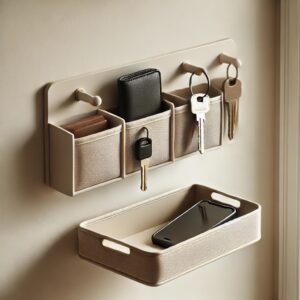
1. The “Drop Zone” Rule – Always put essentials (keys, wallet, phone) in the same brightly colored container near the door.
2. Use Apple AirTag (#ad) trackers can save hours of searching. The Apple AirTag is a simple, effective way to track and find your keys, wallet, luggage, backpack, and more, with an easy one-tap setup using an iPhone or iPad.

3. Visual Cues & Color Coding – Bright colors make items easier to find.
4. Body-Doubling Technique – Searching with someone else helps prevent hyper-focusing on the panic.
5. The “Last Five Minutes” Habit – Take five minutes before leaving to do a quick scan for essentials.
✅ Communicating Needs to Others
Instead of getting defensive, help loved ones understand how ADHD affects memory and organization. Simple explanations can help prevent frustration: “I’m not careless, my brain just files things away in very creative places.”
✅ Self-Compassion & Humor
ADHDers need to embrace the chaos. Yes, it’s frustrating, but sometimes, all you can do is laugh and roll with it. Think of it as a built-in adventure: Where will my keys be hiding today?
Final Thoughts: You Are Not Alone
If you find yourself constantly losing things with ADHD, remember—you’re not broken, and you’re definitely not alone. This is a brain-based difference, not a personal failing. By understanding how your mind works and embracing practical strategies, you can turn daily chaos into something manageable (and maybe even a little funny).
The best thing you can do is adapt, communicate your needs, and most importantly—keep your sense of humor. Because at the end of the day, there’s something hilariously ironic about finding your missing phone in the fridge while talking on it.