
For many people with AuDHD (the co-occurrence of ADHD and autistic traits), masking can become particularly sophisticated. The autistic side often notices social patterns, rules, and expectations, while the ADHD side may be highly attuned to social feedback, rejection, and the desire to connect. Together, these traits can create someone who becomes remarkably skilled at adapting to different people and situations. The challenge is that over time, constant adaptation can make it difficult to distinguish between who you are and who you’ve learned to be.
You walk into a meeting.
You know when to smile. You know when to make eye contact. You know how long to speak before handing the conversation back to someone else. You know when to laugh at a joke that wasn’t particularly funny.
The meeting goes well. People describe you as confident, professional, personable, maybe even charismatic.
Then you get back to your car and sit in silence for fifteen minutes.
Not because the meeting went badly. Because you’re tired. And perhaps more importantly, because you’re not entirely sure how much of what just happened felt genuinely like you.
For many people with AuDHD, this experience is deeply familiar.
On the surface, they appear socially skilled. They have friends. They can communicate effectively. They may be successful at work, active in their communities, and perfectly capable of navigating complex social situations.
Yet underneath that competence is often a question that rarely gets discussed:
What happens when you become so good at fitting in that you lose track of who you are?
The Mask That Doesn’t Look Like a Mask
When people hear the word “masking,” they often imagine someone awkwardly pretending to be something they are not.
That isn’t how masking usually looks in adulthood.
In fact, many AuDHD adults become exceptionally good at social interaction.
They learn how conversations work. They study social expectations. They notice what gets positive reactions and what creates confusion, criticism, or rejection.
Over time, these observations become skills.
At work, they know exactly how to contribute in meetings.
In friendships, they adapt their communication style to match different groups.
In family settings, they often become the easy-going one, the responsible one, or the one who keeps the peace.
From the outside, it can look effortless.
But what people often don’t see is the constant monitoring running in the background.
Am I talking too much? Am I talking too little? Did that joke land? Was that response appropriate? Do I look interested enough? Did I make enough eye contact?
For some people, social interaction feels like driving a car.
For many AuDHD adults, it can feel more like driving a car while simultaneously analysing traffic patterns, checking mirrors, monitoring weather conditions, and writing a report about the journey.
The destination may be the same.
The effort is not.
Why AuDHD People Become Social Chameleons
This adaptation does not happen because someone is being fake. It usually develops because belonging matters.
Many autistic people learn social rules intellectually. They notice patterns, study interactions, and build understanding through observation.
Many ADHD individuals become highly sensitive to feedback. They notice approval, disapproval, rejection, and acceptance quickly and often adapt their behaviour accordingly.
When these traits combine, something interesting can happen. The person becomes highly skilled at adjusting themselves to different environments. They can fit into different groups. Different workplaces. Different social circles. Different family dynamics.
Like a social chameleon, they learn to blend.
The problem is that blending in becomes so normal that it stops feeling like a choice.
It starts feeling like survival.
The Strange Experience of Being Liked
This is where things become particularly complicated.
Because masking often works.
People genuinely like you. They trust you. They enjoy your company. They invite you to things. They value your contribution.
Which sounds wonderful.
And it is.
But it can also create an uncomfortable question:
Do they like me, or do they like the version of me that I’ve learned to present?
The colleague who appears confident may have rehearsed the conversation three times beforehand.
The friend who seems outgoing may need two days alone to recover afterwards.
The parent who appears calm and organised may be using enormous amounts of energy to maintain that image.
The acceptance is real.
But sometimes the certainty isn’t. And that uncertainty can be surprisingly lonely and exhausting.
Read more: Masking in ADHD Isn’t the Enemy: How to Use It Without Losing Yourself
When Adaptation Becomes Identity
Most conversations about masking focus on exhaustion. Exhaustion matters.
But I don’t think it’s the most significant cost.
The deeper cost is often identity confusion.
After years of adapting to different environments, some people begin to lose confidence in their own preferences.
What do I actually enjoy? What do I genuinely want? What are my opinions when nobody else is around?
These questions sound simple. Yet they can become surprisingly difficult to answer.
Someone might adapt their personality slightly depending on the group they’re with.
Professional at work. Relaxed with friends. Supportive with family. Funny in one setting. Quiet in another.
At some point, the line between flexibility and self-loss becomes difficult to see.
A client once laughed while telling me that she could explain executive function, neurodiversity, and workplace accommodations to a room full of executives – but if someone asked her what her favourite music was, she suddenly felt completely confused.
It’s funny.
But it’s also revealing.
Many people become experts on everyone else’s expectations while becoming disconnected from their own.
Read more: The AuDHD Diagnostic Gap: What Happens When You Almost Fit – But Not Quite?
The Cost Nobody Sees
When people think about masking, they often think about social fatigue.
But its effects can spread much further.
Relationships
If you’ve spent years adapting to other people’s needs, it can become difficult to recognise your own.
You may struggle to identify boundaries until you’ve already crossed them. You may say yes when you mean maybe. Or maybe when you mean no.
Not because you’re dishonest.
Because you’ve become highly practised at prioritising connection over self-awareness.
Career
Many AuDHD adults become successful in roles that don’t actually suit them. They can perform competence for years. Sometimes decades.
The promotion looks fantastic on LinkedIn. The salary increases. People congratulate them.
Meanwhile, they’re quietly wondering why success feels so exhausting.
Everyday Life
Even small decisions can become difficult when you’ve spent years taking cues from other people.
What restaurant do you want? What do you want to do this weekend? What hobby would you choose if nobody expected anything from you?
Sometimes these questions feel surprisingly hard. Not because you don’t have preferences.
Because you haven’t practised listening to them.
Why “Just Be Yourself” Is Terrible Advice
Few phrases sound more helpful. Few phrases are less useful.
When someone has been masking for years, “just be yourself” can feel impossible.
Which self? The one at work? The one with friends? The one at home? The one that emerges when nobody is watching?
People often assume authenticity is something we simply access. For many AuDHD adults, authenticity is something they have to gradually rediscover.
Not because they have lost themselves completely. But because the signal has become buried beneath years of adaptation.
Unmasking Isn’t What Most People Think
When people hear about unmasking, they sometimes imagine dramatic change.
Saying exactly what you think. Ignoring social rules. Refusing to adapt.
That isn’t what healthy unmasking looks like. Healthy unmasking is often much quieter.
It might mean admitting you’re tired instead of pretending you’re fine. It might mean declining an invitation without inventing an elaborate excuse. It might mean acknowledging that a certain environment overwhelms you. It might mean allowing yourself to have preferences.
Unmasking isn’t becoming someone new.
It’s becoming more honest about who you’ve been all along.
Finding Yourself Again
One of the most helpful shifts is moving away from the question:
“How do I stop masking?”
And towards:
“What helps me feel more like myself?”
Notice where you feel relief. Which people allow you to relax? Which environments require less effort?
Pay attention to your energy. Not just enjoyment.
Many people enjoy activities that also drain them.
Learning to recognise the difference is powerful.
Ask yourself:
What would I choose if nobody was watching?
Not what would impress people. Not what would make sense. Not what you should want. What would you genuinely choose?
And perhaps most importantly, experiment with small acts of honesty. Not dramatic declarations.
Small moments. Expressing a preference. Setting a boundary. Admitting uncertainty.
These moments help rebuild trust in your own voice.
Could Coaching Help?
Many people discover that understanding masking intellectually is easier than changing lifelong patterns.
Knowing that you’ve adapted is one thing.
Learning to reconnect with your own needs, preferences, limits, and identity is another.
Coaching can provide a space to explore questions such as:
- Who am I when I’m not performing?
- What actually energises me?
- Which parts of my life fit me and which parts have I adapted to?
- How can I become more authentic without losing the relationships and skills I’ve worked hard to build?
The goal is not to remove every mask.
The goal is to understand when adaptation is helping and when it’s preventing you from being fully yourself.
Perhaps You Were There All Along
Many people worry that they have lost themselves.
I don’t think that’s usually true.
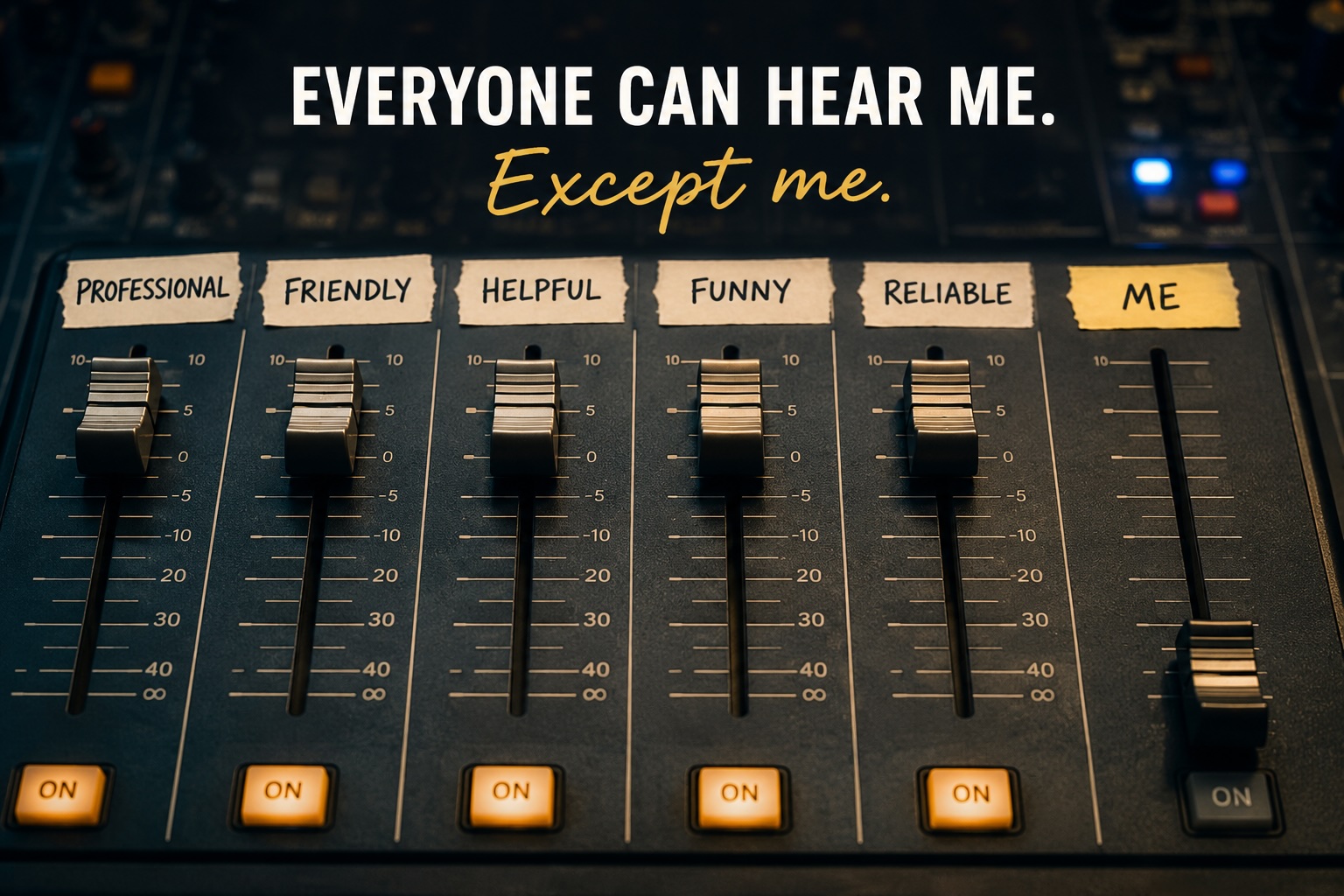
More often, I think they have become exceptionally skilled at listening to everyone except themselves.
The preferences are still there. The needs are still there. The personality is still there.
It’s just been competing with years of adjustment, accommodation, and performance.
And perhaps unmasking is not about discovering a completely different person.
Perhaps it’s about turning down the volume on who you think you should be long enough to hear who you’ve been all along.
If you recognise yourself in these experiences and would like support in exploring them further, coaching can provide a structured space to better understand your patterns, strengths, and challenges. Much of my work focuses on helping neurodivergent adults move beyond self-understanding and towards a way of living that feels more authentic and sustainable.
Dana Dzamic
Neurodiversity consultant and ADHD coach
Founder of ADHD Insight Hub