

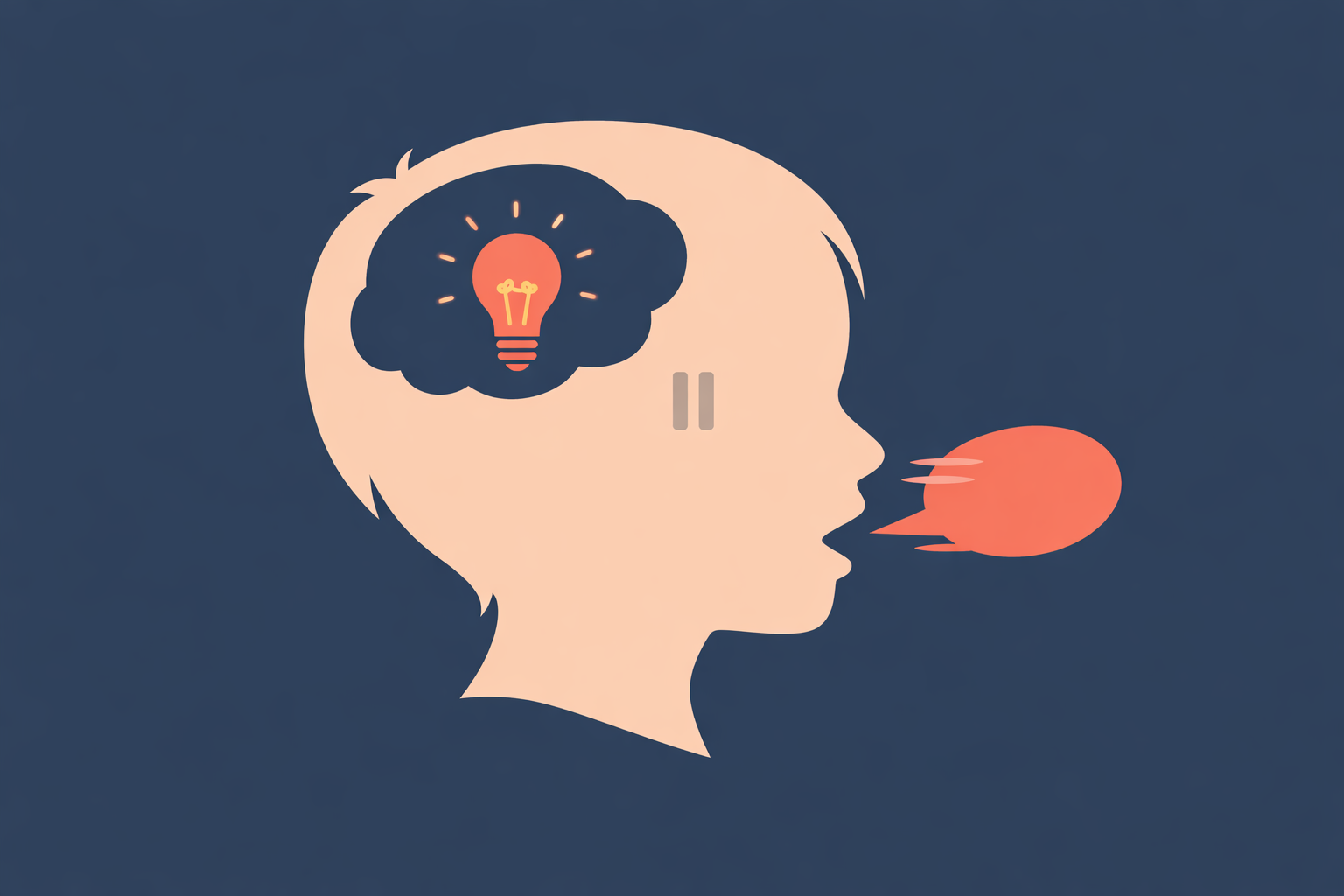
ADHD impulsivity in children is often misunderstood. Parents see behaviour that looks deliberate, but inside the child’s brain the moment happens much faster than adults realise.
If you’re raising a child with ADHD, you’ve probably heard this sentence many times:
“I didn’t mean to do it.”
Maybe your child blurted out something awkward at the dinner table.
Maybe they pushed a sibling in frustration.
Maybe they shouted the answer in class before the teacher even finished the question.
And when you ask, “Why would you do that?”, they look genuinely confused and say:
“It just came out.”
For many parents, this moment is deeply frustrating. It can feel like your child should know better. After all, you’ve explained the rules many times.
But here’s something important that is rarely discussed in parenting advice:
ADHD impulsivity doesn’t just look different from the outside, it feels different from the inside.
To understand impulsivity in ADHD children, we need to look beyond the behaviour and ask a deeper question:
What actually happens in the child’s mind in the moment before the action?
What ADHD Impulsivity Really Is (Beyond “Bad Behaviour”)
Impulsivity is often misunderstood.
Adults tend to interpret it as:
- lack of discipline
- poor self-control
- not caring about consequences
- deliberate rule-breaking
- difficult character
But in ADHD, impulsivity is largely about timing in the brain.
The brain relies on two important systems working together:
- The idea generator – the part that produces thoughts, reactions, and impulses.
- The braking system – the part that pauses behaviour long enough to evaluate what to do.
In children with ADHD, the idea generator works perfectly well, often very well. Ideas, reactions, and emotions appear quickly and intensely.
The challenge is that the braking system activates a little later.
So the sequence often looks like this:
Idea → Action → Realisation
Instead of:
Idea → Pause → Decision → Action
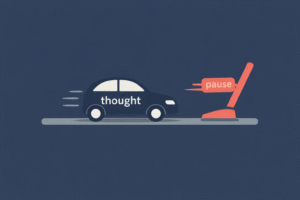
Many people describe it like a car with a powerful engine but slightly delayed brakes.
The child is not trying to misbehave. Their brain simply moves faster than the pause.
And very often, the realisation comes seconds later.
What Impulsivity Feels Like for a Child with ADHD
One of the most revealing ways to understand ADHD impulsivity is simply to listen to how children describe it.
When asked what happens in the moment before an impulsive action, many children say things like:
“The thought jumps out of my mouth before I can catch it.”
“It’s like my brain pushes the words out.”
“I know I shouldn’t say it, but it comes out really fast.”
“Sometimes my body moves before I think.”
“It’s like a pop in my head and then I do it.”
“I was going to stop… but it already happened.”
Notice something interesting in these descriptions.
Children rarely say they planned the behaviour. Instead, they describe a moment where the action simply happens too quickly to stop.
For many kids with ADHD, the experience is almost physical:
- the idea appears suddenly
- the urge feels strong
- the action follows immediately
Only afterwards does the thinking brain catch up. That moment of realisation can be uncomfortable. And sometimes confusing even for the child.
How Impulsivity Looks from a Parent’s Point of View
From the outside, impulsivity can look very different.
Parents may see:
- constant interruptions
- blurting out comments
- grabbing things from siblings
- risky physical behaviour
- emotional outbursts
- acting without thinking
It can be exhausting. And sometimes embarrassing.
You might be standing in a quiet shop when your child suddenly says something very loud or socially awkward. People turn around. You feel every eye on you.
Your immediate thought might be:
“Why would they say that?”
But at the exact same moment, your child may already be thinking:
“Oh no… I shouldn’t have said that.”
This is the invisible part of impulsivity that adults often miss. From the outside, the behaviour looks intentional. From the inside, the child may already feel regret.
The Regret That Often Comes Seconds Later
Many children with ADHD experience very quick regret after impulsive behaviour.
But because adults are still reacting to the behaviour, that regret often goes unnoticed.
Children frequently say things like:
“I didn’t want to do that.”
“I try to stop but it’s too fast.”
“I knew it was wrong after I did it.”
“I always mess up.”
Over time, repeated impulsive moments can affect how children see themselves.
If a child constantly hears messages like:
- “Why would you do that?”
- “You never think.”
- “What’s wrong with you?”
They may begin to believe that something is fundamentally wrong with them.
But impulsivity in ADHD is not a character flaw. It is a regulation challenge. And understanding this difference is incredibly important for a child’s self-esteem.
Helping Children Build the Missing Pause
When we understand impulsivity as a timing challenge, our approach changes.
Instead of focusing only on stopping behaviour, we focus on creating space between the impulse and the action. This pause can be supported in several ways.
Visual pause reminders
Simple visual cues can help children slow down.
For example:
- a small “pause” card on a desk
- a stop sign sticker on a notebook
- visual reminders near screens or homework areas
These cues gently prompt the brain to pause before reacting.
Body-based pause strategies
Sometimes it’s easier to pause the body than the mind.
Children can practice small physical actions such as:
- taking one slow breath
- squeezing their hands together
- counting to three
- pinching their skin
These actions create just enough delay for the thinking brain to catch up.
Structured environments
Children with ADHD often regulate behaviour better in predictable environments.
Clear routines, visual schedules, and structured transitions can reduce situations where impulsive reactions happen.
Compassionate reflection
After an impulsive moment, curiosity can be more helpful than criticism.
Instead of saying:
“Why would you do that?”
You might ask:
“Did it happen really fast?”
This kind of question helps children build awareness rather than shame. And awareness is the first step toward better self-regulation.
The Most Important Shift for Parents
Understanding ADHD impulsivity requires a small but powerful shift in perspective.
The goal is not simply:
“Make the child stop the behaviour.”
The goal is:
“Help the child develop a pause.”
That pause develops gradually as children gain:
- awareness of their impulses
- emotional regulation skills
- supportive environments
Most importantly, they need adults who recognise that impulsivity is not a sign of laziness or disrespect. It is a difference in how the brain manages timing and regulation.
Seeing the Child Behind the Behaviour
When a child with ADHD says:
“I didn’t mean to do it.”
They are often telling the truth. The action simply happened faster than the pause.
Understanding impulsivity through a child’s eyes allows parents to move from frustration toward curiosity.
And when children feel understood rather than judged, something important begins to happen.
They slowly develop the very skill they struggle with most:
the ability to pause before acting.
It doesn’t happen overnight.
But with patience, support, and the right understanding, children with ADHD can learn to manage impulsivity while keeping the creativity, energy, and spontaneity that also make them who they are.